|
The
Barn's History - The Archaeological Project
The
Barn is a listed building (Grade II), and together with
the adjacent Cart Shed and Stables formed part of the historic
farm. The buildings also lie in an area of archaeological
potential, and within the medieval village. As part of the
development a series of archaeological measures were required
by Surrey County Council and by the local planning authority.
The Barn and
adjacent buildings were all basically timber-framed structures
of 19th century date. There was no evidence for earlier
construction, although it is likely that the land surface
had been reduced when these buildings were constructed.
The Farmhouse itself is thought to date from the 16th century,
and the adjacent Granary is probably of 18th century date.
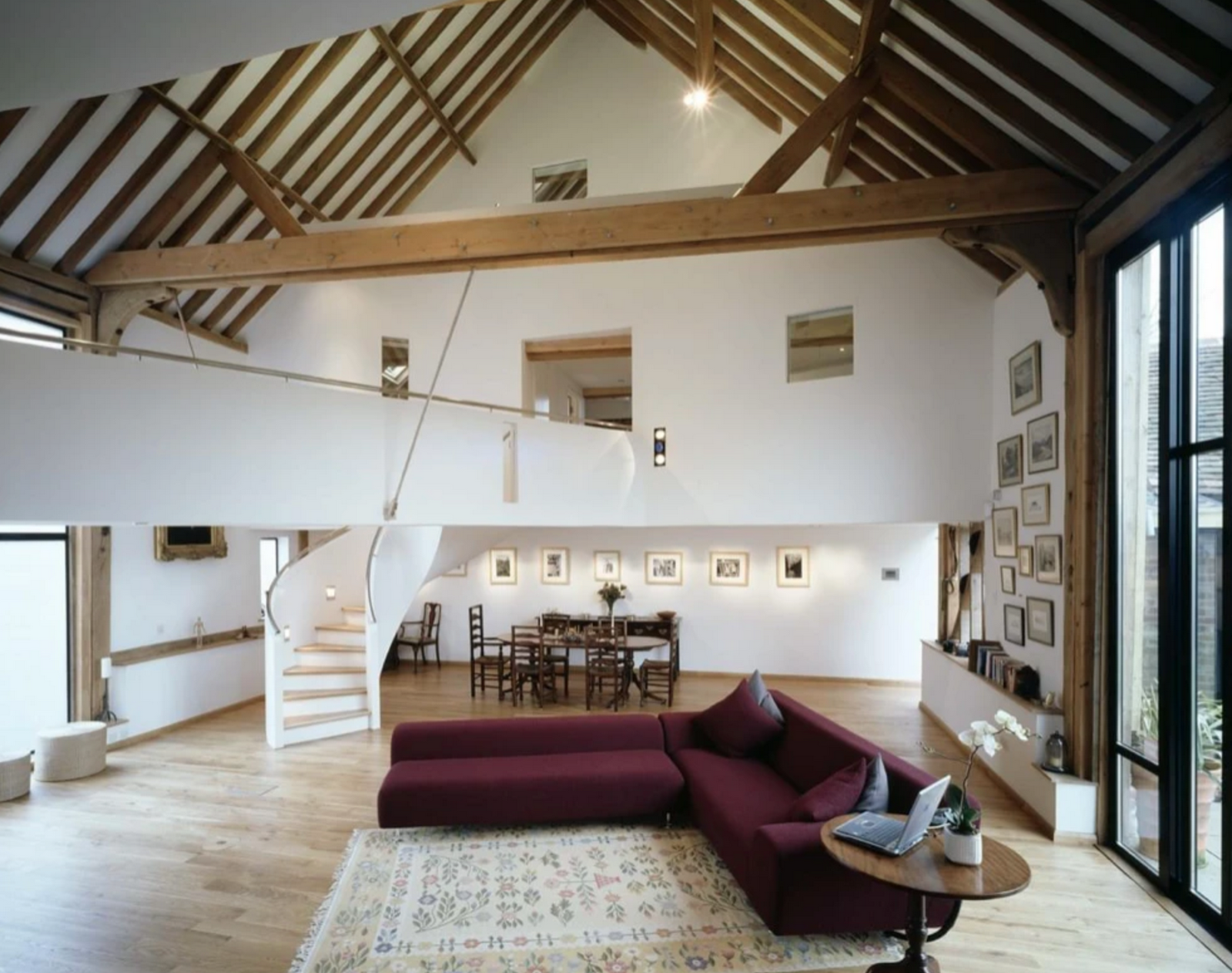
The Threshing
Barn formed the principal building within the development,
and was probably built some years before its appearance
on the village Tithe map of c.1846. The building measures
some 16m by 9m in plan by 4.5m high, and is constructed
mainly of softwood – frequently with carpenters’
marks – over machine-cut oak wall frames and a brick
base. The building is divided into a total of six bays,
the easternmost previously containing a root store and probable
hayloft.
Externally
the Barn is weatherboarded, with an original full-height
brick wall at the eastern end and a half-hipped tiled roof.
The original timber threshing floor and supports had been
entirely replaced, but much of the structure remained intact
and has been retained within the new development.
The Barn roof
is generally constructed with raking queen posts set between
the tie beams and a lower line of clasped purlins, although
at the western end of the Barn vertical queen posts rise
to the level of the upper purlins. A notable feature is
the hanging knee braces, probably of elm, which support
the tie beams.
The adjacent
Cart shed and Stables formed smaller and less significant
timber buildings. The Cart shed was a later 19th century
development and was probably prefabricated off-site. The
structure was internally subdivided and originally partly
open to the east, and may have had a dual use for carts
and livestock.
The Stables
were the product of gradual development rather than one
build, starting with an earlier 19th century brick wall.
There were some five phases of addition or alteration, much
of it of quite recent date and including further brick and
stone walls and timber superstructure.
Compass Archaeology
Limited, 63 Union Street, London, SE1 1SG
Tel: 020 7403 9660

Carpenter’s
mark from the eastern end of the barn
|